Is the King James Bible Infallible?
By Brother Peter Dimond, O.S.B.
Source: vaticancatholic.com
KING JAMES ONLYISM EXPOSED
Bro. Peter Dimond
I recently studied numerous books on the King James Bible, its history, and the controversy surrounding it. There are many facts we need to consider. Knowing these facts sheds necessary light on the so-called ‘Christians’ who believe that the 1611 King James Version of the Bible is infallible (the KJV-Onlyists), the false doctrine of sola scriptura, and Protestantism in general.
There is a group of Protestants who believe that a particular version of the King James Bible (the 1611 AV or ‘Authorized Version’) is alone the perfect word of God on Earth. These people are sometimes called ‘King James Onlyists.’ Their ranks include individuals such as ‘Pastor’ Steven Anderson, Sam Gipp, Kent Hovind, Texe Marrs, Gail Riplinger, Peter Ruckman, as well as many independent Protestant ‘pastors’ and ‘churches’, especially those identifying as ‘Baptist.’
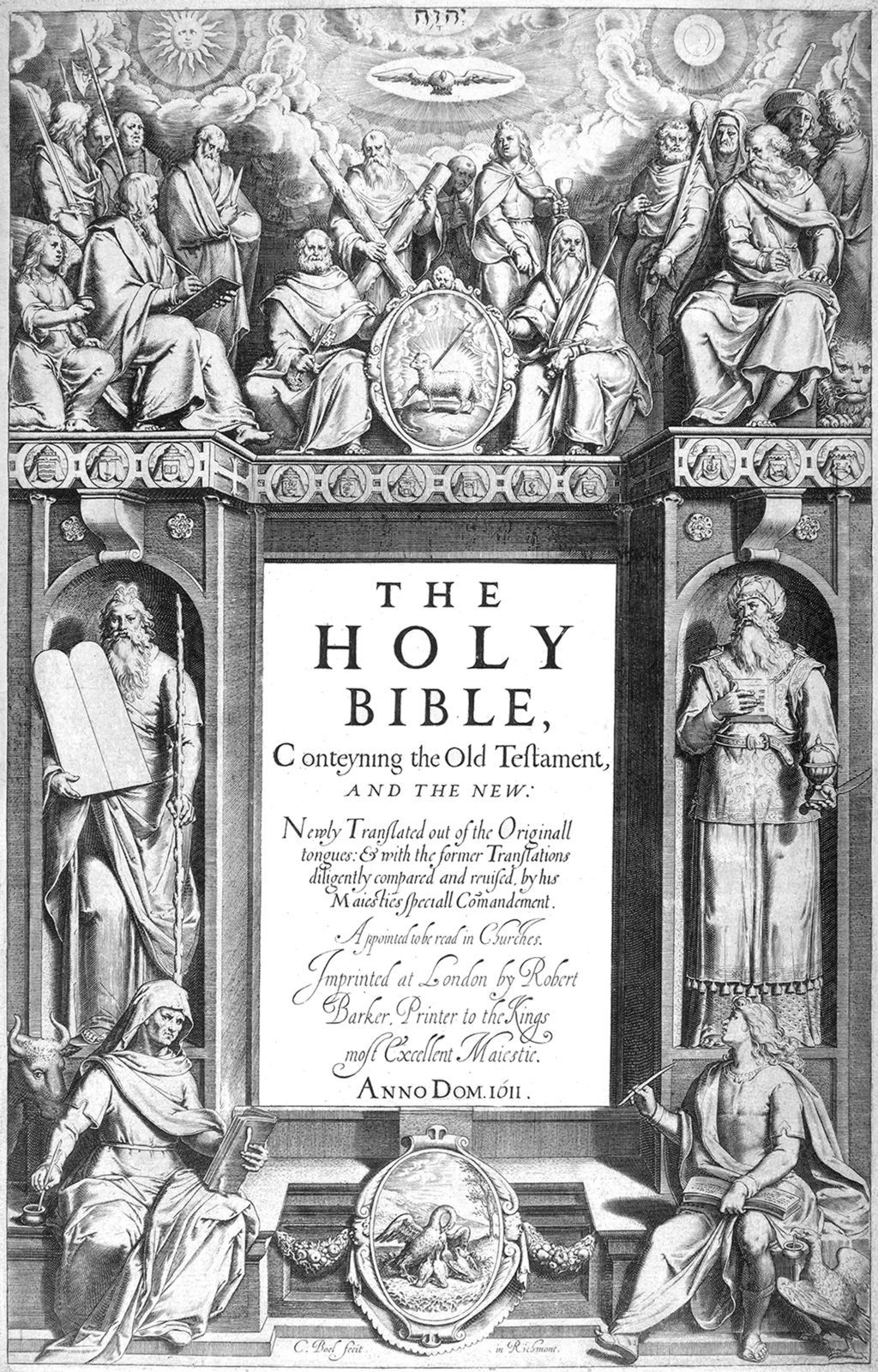
Title Page of the ‘Authorized Version’ or 1611 King James Bible
Gary Miller, Why the King James Bible – Authorized Version 1611 – Is the Perfect Word of God, pp. 36-37: “As we begin comparing verses from the different versions, remember this: there are no errors in the 1611 Authorized King James Version. It is God’s perfectly preserved words and you can trust it completely.”
Texe Marrs, Power of Prophecy: “We believe that the King James Bible is God's perfect word, is without error, and is man's authoritative guide for how we should live.”
Adherents of the ‘King James Bible Only’ position hold that the 1611 ‘Authorized Version’ of the King James Bible is infallible. As you search their materials for an explanation of why one particular Bible translation, authorized by a 17th century English King named James, produced by a committee of Anglicans and Puritans, would alone be infallible, you find one – and only one – answer.
The only answer they can offer for why one particular bible translation in 17th century England would be perfect and infallible is the following:
THE KJV IS PERFECT BECAUSE GOD PROMISED TO PRESERVE HIS WORD (PSALM 12:6-7); AND IF THE KJV IS NOT INFALLIBLE THERE ISN’T AN INFALLIBLE VERSION ANYWHERE, FOR WE NO LONGER HAVE THE ORIGINAL NEW TESTAMENT WRITINGS, BUT ONLY COPIES MADE BY HAND THAT ARE LESS THAN PERFECT; AND SINCE GOD PROMISED TO PRESERVE HIS WORD (PSALM 12:6-7) HE WOULD NATURALLY DO THIS FOR THE MASSES IN A COMMON TONGUE. THEREFORE THE 1611 KJV, WHICH EVENTUALLY BECAME THE DOMINANT ENGLISH VERSION, MUST BE INFALLIBLE.
To put it more concisely, their answer is: there must be an infallible Bible version and it’s therefore the 1611 KJV. If this doesn’t strike you as circular and illogical reasoning – presuming exactly what they would need to prove – then you really need to pray for the grace of God. However, let’s consider numerous facts which show why their position is biblically, historically, and logically false.
WHICH ‘AUTHORIZED VERSION’?
KJV-Onlyists hold that the 1611 King James is infallible and perfect. They emphasize that the 1611 King James is the ‘Authorized Version,’ i.e. authorized by King James I.
Dr. Samuel Gipp, An Understandable History of the Bible, Chapter 9: “I personally believe that God has perfectly preserved His Word in the King James or Authorized Version. I can at least produce a King James Bible to show what I believe in. Any person who claims that God inspired the original autographs perfectly, cannot produce those original manuscripts to prove it!... I am saying that the Authorized Version is every word of God that was in the original autographs, preserved to this day.”
This raises a number of questions:
1) Why would the ‘authorization’ of an English king (more than 1,500 years after Christ) make a translation of the Bible infallible? Obviously it wouldn’t. God never promised that English kings centuries after Christ, let alone King James I, speak infallibly or authorize without error for all of Christ’s faithful.
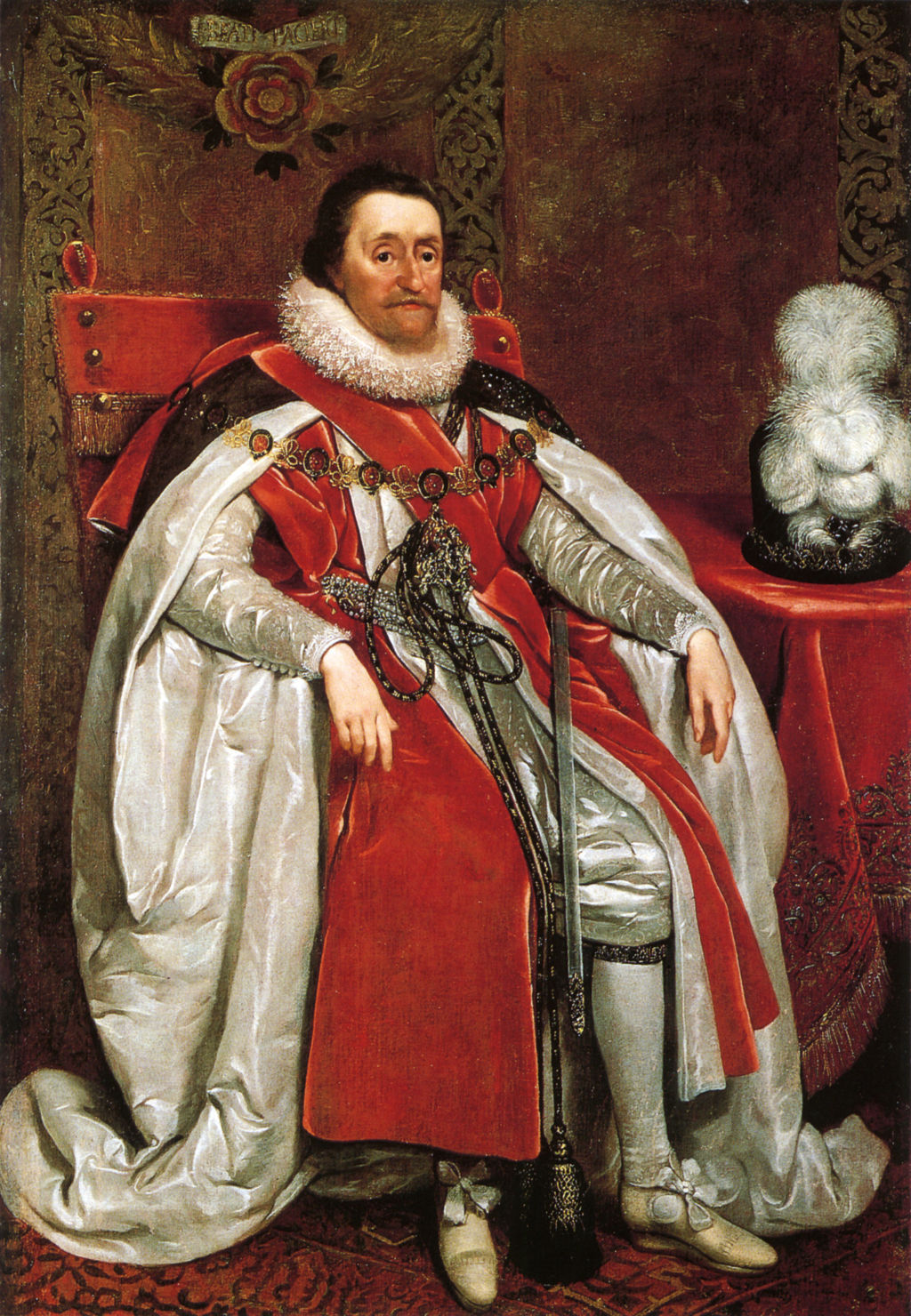
King James I of England
2) Moreover, was the ‘authorization’ given to the 1611 KJV even unique, or had other versions of the Bible been given a similar ‘authorization’? As we will see, other versions had received similar authorization; and therefore, if the 1611 KJV is held to be infallible because it is the ‘Authorized Version,’ then other versions authorized by English sovereigns must also be considered infallible. Yet, KJV-Onlyists illogically and inconsistently apply infallibility to the KJV alone.
3) Did King James I even ‘authorize’ the text/content of the 1611 KJV, or just that it would be permissible to print whatever was translated?
Christopher De Hamel served for a quarter century as the head of the Western Manuscripts department at Sotheby's in London. He authored and compiled a large work entitled, The Book, A History of the Bible. He explains:
Christopher De Hamel, The Book, A History of the Bible, pp. 247-248: "First, of all, the term 'Authorized' has no real historical validity. The book [the 1611 King James Bible] was dedicated to King James I, who had initiated the translation, but no legal or royal endorsement was conferred on the text itself. The privilege was associated with the printers, not the text. The royal privilege for printing Bibles goes back to the sixteenth century. In 1589, Queen Elizabeth had granted an exclusive patent for the publishing of Bibles in English to Christopher Barker. In a Bible printed in London that year, Barker first calls himself the printer to the Queen. This right was inherited by his son, Robert Barker (d. 1645), who is described on the title-page of the original Authorized Version in 1611 as 'Printer to the Kings most Excellent Majestie'. When monopolies were abolished in England in 1623, an exception was made for royal grants of the sole right to print certain books."
De Hamel explains that while King James I initiated the translation, and allowed it to be printed, he gave no royal endorsement or special ‘authorization’ to the content or the text itself. The ‘authorization’ was for the printers, rendering it lawful for them to proceed with whatever the translators put together.
However, let’s suppose King James I’s ‘authorization’ of the King James translation did apply to the final text/content of the 1611 KJV. Even in that case, the ‘authorization’ was not qualitatively different from the ‘authorization’ that had previously been given to earlier English bibles, such as The Great Bible under King Henry VIII or The Bishops’ Bible under Queen Elizabeth.
BIBLES WERE ‘AUTHORIZED’ BY ENGLISH SOVEREIGNS BEFORE THE 1611 KING JAMES VERSION
Dr. Laurence M. Vance, who is actually a strong supporter of the KJV, wrote a book called King James, His Bible And Its Translators. On pp. 87-88, he acknowledges facts which demolish the claim, made by KJV-Onlyists, that the 1611 KJV alone was the ‘Authorized Version.’
THE GREAT BIBLE WAS ‘AUTHORIZED’ BY KING HENRY VIII:
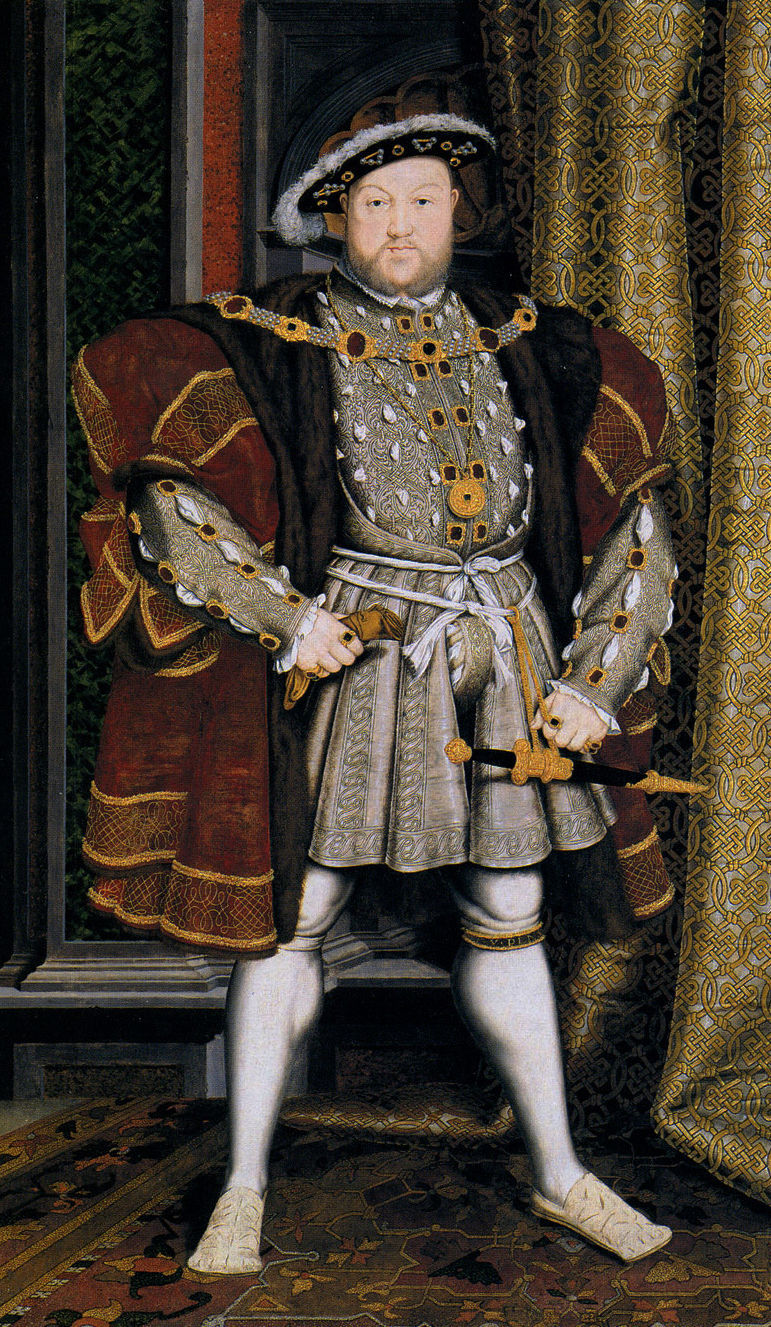
King Henry VIII
“In the fourth (Nov. 1540) and sixth (Nov. 1541) editions of the Great Bible, the title page is completely rewritten: ‘The Bible in English of the largest and greatest volume, authorized and appointed by the commandment of our most redoubted Prince and sovereign Lord, King Henry the viii., supreme head of this his church and Realm of England: to be frequented and used in every church within this his said realm, according to the tenor of his former Injunctions given in that behalf.’” (Vance, King James, His Bible And Its Translators)
THE BISHOPS’ BIBLE WAS AUTHORIZED BY QUEEN ELIZABETH:

Queen Elizabeth
“The editions [of the Bishops’ Bible] from 1574-1578 contain the phrase: ‘Set forth by authority.’ An edition of 1584 says: ‘Of that translation authorized to be read in churches.’ All editions from 1585 to 1602 include the statement: ‘Authorized and appointed to be read in churches.’” (Vance, King James, His Bible And Its Translators)
As these facts show, at the very least the 1611 King James Version was the third ‘Authorized Version’ of the English Bible. I say at the very least because one could argue that the Coverdale Bible (1535) and The Matthew Bible (1537) had also been ‘authorized.’ Yet, KJV-Onlyists wrongly contend that the 1611 Version was not only uniquely authorized, but that such ‘authorization’ by an English sovereign would for some reason contribute to its perfection and infallibility! It’s a position so illogical that it really deserves to be categorized with the position of Mormons and other cult followers.

Joseph Smith, ‘prophet’ of the Mormon sect
Mormons simply assume that their (false) ‘prophet’ Joseph Smith, whom they consider to be the greatest person besides Jesus, was given new revelations by God and divinely authorized to ‘restore the Church.’ They simply declare him to be their authority perhaps because it gives them a level of comfort and a (false) sense of security. In the same way, since KJV-Onlyists feel they must have a translation they can follow unhesitatingly, they likewise declare that the 1611 KJV must be infallible. Notice how this cult mentality is captured in the following quote from well-known KJV-Onlyist, Samuel Gipp.
Dr. Samuel Gipp, An Understandable History of the Bible, Chapter 9: “I personally believe that God has perfectly preserved His Word in the King James or Authorized Version. I can at least produce a King James Bible to show what I believe in. Any person who claims that God inspired the original autographs perfectly, cannot produce those original manuscripts to prove it!... I am saying that the Authorized Version is every word of God that was in the original autographs, preserved to this day.”
Notice the comfort he finds in being able to point to a version of the Bible into which he can put his ‘faith.’ That’s what reassures and relieves him, even if there is no logical or historical reason to conclude that this particular version has been infallibly protected by Christ. The fact that he has some Bible version to ‘believe in’ is his main concern. In the same way, it provides Mormons or other cultists comfort to have a ‘prophet’ to follow, no matter how unsubstantiated or illogical that ‘prophet’s’ claim to a divine commission might be.
Both groups (KJV-Onlyists and Mormons) operate under their respective assumptions without any proof for them and contrary to logical consistency with the revelation of Christ, which of course said nothing about Joseph Smith, King James or a King James Bible translation. In fact, in anointing, on their own authority, King James’ Bible to the status of divinely protected and even binding, the King James Onlyists actually make King James their ultimate authority and a new false Christ.
The illogical, idolatrous, and anti-Christian cult-like assumptions built in to the KJV-Only position are well illustrated by the following quotes.
Dr. Samuel Gipp, The Answer Book – A Helpbook for Christians [concerning the King James], Q. #5, pp. 28-29: “We have no reason to doubt that the Bible we hold in our hands [the KJV] is the very word of God preserved for us in the English language. The authority for its veracity lies not in the first printing of the King James Version in 1611, or in the character of King James I, or in the scholarship of the 1611 translators, or in the literary accomplishments of Elizabethton [sic] England, or even in the Greek Received Text. Our authority for the infallible words of the English Bible lies in the power and promise of God to preserve His word! God has the power. We have His Word.”
He says that the KJV is not infallible on the basis of the authority of the translators or the king or the underlying Greek text, but on the authority of God. That begs the question, of course: on what basis have you concluded that God gave His authority to, and infallibly protected, the 1611 King James Version? Where did God ever guarantee that? The answer is He never said anything about the 1611 King James Version. Hence, the conclusion that He infallibly protected this particular bible translation is nothing more than a blind faith assumption with no basis in Scripture and no consistency with history; for why is the 1611 KJV infallible and not another translation? The position is patently absurd, idolatrous, and evil. It’s equivalent to the modus operandi of Mormons or other cultists, who simply erect an authority for themselves (Joseph Smith) and ascribe infallibility to that authority, despite the fact that the infallibility or divine authority they ascribe to it has no link with Christ’s establishment or what is taught in Scripture.
James L. Melton, How I Know the King James Bible is the Word of God: “The term "Authorized" has traditionally been applied to the King James Version alone, for this is the one Book which the Holy Spirit has blessed and used for so long… The KJV translators were not like this. Their scholarship far exceeded that of modern translators, yet they remained humble and allowed God to use them in order to produce an infallible masterpiece.” (Shelton, TN)
WAS KING JAMES I A HOMOSEXUAL?
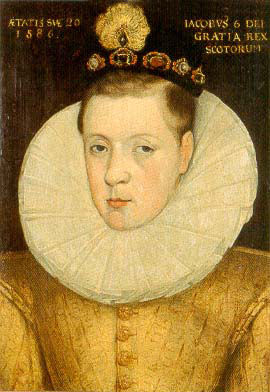
King James I, at age 20
While it’s not necessary to prove that the King James Only position is false, it should be mentioned that many historians believe King James I was a homosexual. Non-Catholic theological historian Alister McGrath wrote a book that’s quite laudatory of the King James Bible. On the issue of King James I’s homosexuality, he states:
“Further concerns were expressed over the king’s increasingly obvious homosexual tendencies, which led to certain royal favorites being granted favors that were the subject of much comment and envy… Although James fondled and kissed his favorites in what was widely regarded as a lecherous manner in public, the court was prepared to believe that his private behavior was somewhat more restrained.” (Alister McGrath, In the Beginning – The Story of the King James Bible and How It Changed a Nation, a Language, and a Culture, pp. 170-171.)
McGrath’s work also contains the following interesting quote, which illustrates how emotion and man-made tradition moved people to (wrongly) equate the King James translation with the infallible originals of the Bible.
Alister McGrath, In the Beginning – The Story of the King James Bible and How It Changed a Nation, a Language, and a Culture, p. 302: “The idea of inspiration, which was traditionally applied to the biblical texts in their original languages, now came to be applied to the English translation of the King James Bible itself… Richard Whately (1787-1863), archbishop of Dublin from 1831, caused consternation at his diocesan conference of clergy when he produced a copy of the King James Bible, and declared: ‘Never forget, gentlemen, that this is not the Bible.’ Gasps of astonishment were heard throughout the auditorium. After a moment’s pause for effect, he continued, ‘This, gentlemen, is only a translation of the Bible.’”
KING JAMES ONLYISTS CONTRADICT THE KING JAMES TRANSLATORS
Since they consider the KJV to be infallible, KJV-Onlyists reject the use of other Bible versions. Yet, the very translators of the 1611 King James Bible recommended using a variety of translations. That completely contradicts modern KJV-Onlyists, who place the KJV in an infallible category by itself and reject the use of other versions.

Richard Bancroft, ‘chief overseer’ of the King James Bible translation
Translators’ Preface to the 1611 King James Version: “For as it is a fault of incredulity, to doubt of those things that are evident: so to determine of such things as the Spirit of God hath left (even in the judgment of the judicious) questionable, can be no less than presumption. Therefore as S. Augustine saith, that variety of Translations is profitable for the finding out of the sense of the Scriptures: [S. Aug. 2. de doctr. Christian. cap. 14.] so diversity of signification and sense in the margin, where the text is no so clear, must needs do good, yea, is necessary, as we are persuaded.”
In their preface to the 1611 King James Bible, the translators also praise St. Augustine and St. Jerome, even though Augustine and Jerome were Catholic saints whose views would be condemned as non-Christian by KJV-Onlyists in our day.
MANY OF THE KING JAMES BIBLE TRANSLATORS WERE ANGLICANS AND BELIEVED IN INFANT BAPTISM
Many of the KJV translators were also Anglicans who believed in infant baptism – a position that would be rejected by many, if not most, KJV-Onlyists today.
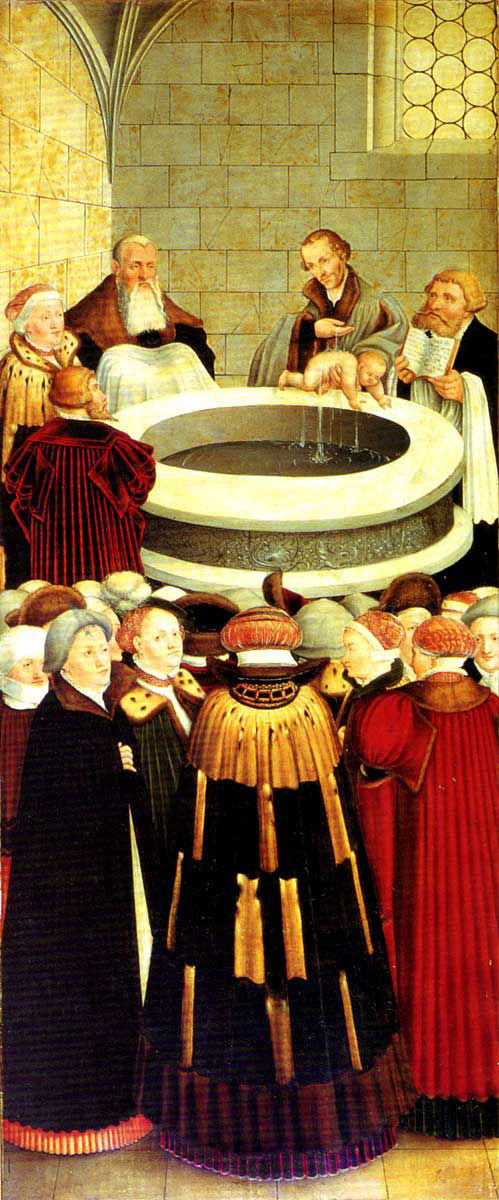
A Protestant baptizing an infant
THE TRANSLATORS OF THE KING JAMES BIBLE ACKNOWLEDGED THE SEPTUAGINT
The translators of the KJV also acknowledged the existence and significance of the Septuagint (the Greek Translation of the Old Testament). Many KJV-Onlyists hold that the Septuagint was a myth. They claim this Greek translation of the OT never existed before the time of Christ.
Dr. Samuel Gipp, The Answer Book – A Helpbook for Christians [concerning the King James], Q. #9, p. 45: “QUESTION: What is the LXX [the Septuagint]? ANSWER: A figment of someone's imagination.”
As we see, KJV-Onlyist Gipp says that the Septuagint was a myth. In the quotation below, note that the very men who translated the King James Bible (the Bible which Gipp worships) contradict him. The King James translators acknowledged that the Apostles used the LXX (the Septuagint), and that it was ‘the word of God.’
Translators’ Preface to the 1611 KJV: “But, when the fulness of time drew near, that the Sun of righteousness, the Son of God should come into the world, whom God ordained to be a reconciliation through faith in his blood, not of the Jew only, but also of the Greek, yea, of all them that were scattered abroad; then lo, it pleased the Lord to stir up the spirit of a Greek Prince (Greek for descent and language) even of Ptolemy Philadelph King of Egypt, to procure the translating of the Book of God out of Hebrew into Greek. This is the translation of the Seventy Interpreters, commonly so called, which prepared the way for our Saviour among the Gentiles by written preaching, as Saint John Baptist did among the Jews by vocal… The translation of the Seventy dissenteth from the Original in many places, neither doth it come near it, for perspicuity, gravity, majesty; yet which of the Apostles did condemn it? Condemn it? Nay, they used it, (as it is apparent, and as Saint Jerome and most learned men do confess) which they would not have done, nor by their example of using it, so grace and commend it to the Church, if it had been unworthy of the appellation and name of the word of God.”
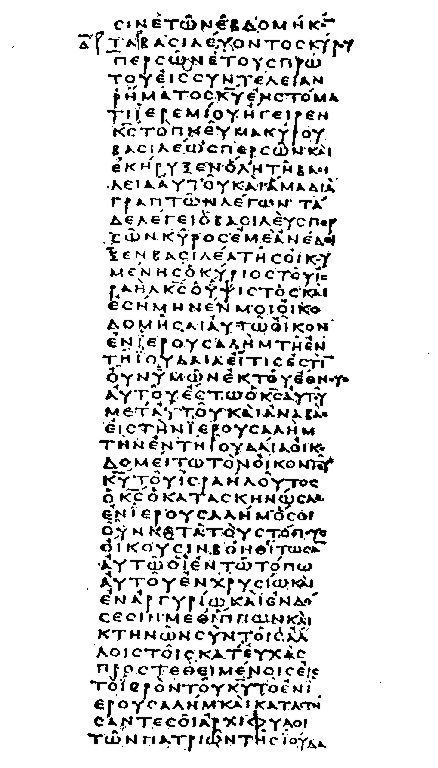
A part of the Septuagint, from the Greek manuscript Vaticanus
NO COPYRIGHT ON THE 1611 KJV?
Some KJV-Onlyists argue that the KJV is infallible because it has or had no copyright?! Their claim in this regard is both incoherent and illogical; for, on the one hand, they seem to acknowledge that the KJV originally carried some form of a copyright, but they contend it didn’t matter; and then they illogically conclude that a work without a copyright is for some reason protected by God?!
James L. Melton, How I Know the King James Bible is the Word of God: “BECAUSE IT HAS NO COPYRIGHT- The original crown copyright of 1611 does not forbid anyone today from reprinting the Authorized Version. It was only copyrighted then for the purpose of allowing the printer to finance the publication. For nearly four hundred years now we have been printing millions of copies of KJV's without requesting permission from anyone. Over eight-hundred million copies of the Authorized Version have been printed without anyone paying royalties. This cannot be said of any of the new translations.”
Obviously there’s nothing in Christ’s teaching or the Bible about a translation being guaranteed infallibility because it has no copyright. Moreover, the claim of KJV-Onlyists on this point is false. The original KJV did have a copyright.
Christopher De Hamel, The Book, A History of the Bible, p. 247: "Let us look first of all at the legal status of the Authorized Version, for (strangely for a text which declares itself to be the essential birthright of all people) it was protected by copyright. Only certain publishing houses were licensed to print bibles. From the seventeenth century onwards, many attempts were made by other commercial enterprises to capitalize on the Bible and eventually to dislodge it from its position as a protected commodity."
As we see, the King James Bible was protected by copyright. De Hamel explains how the non-privileged publishers even attempted to circumvent the copyright on printing the ‘Authorized Version’ by disguising the text within biblical commentaries, for the commentaries were not protected by the same copyright.
Christopher De Hamel, The Book, A History of the Bible, p. 253: “There were other ways of chipping away at the privilege of the Authorized Version… If the text of the Authorized Version was issued attached to a commentary or a collection of explanatory notes, then (they would argue) it was technically not a Bible, even though it necessarily required extracts which might amount to a complete text. From about 1720, printers without the royal privilege began to publish Bibles disguised as commentaries… The complete text of the Authorized Version was included in what pretended to be a commentary. When publishers were not prosecuted, they grew braver. The supposed commentaries become briefer and the Bible text more prominent. It became common practice for printers to include skimpy ‘notes’ simply as a device for evading copyright.”
So, yes, the KJV did carry a copyright. Once the American colonies revolted against the British, obviously the British copyright of printing the Authorized Version was of no concern to them; but in Britain itself the KJV remained under copyright for hundreds of years after 1611. Even to this day, there are some copyright restrictions on printing it in England.
Moreover, in the U.S. many works lapse into the public domain approximately 50 or 70 years after the work was created or its creator has passed away. This includes many works of history, literature and art, not just the King James Bible. The argument of KJV-Onlyists, that the KJV was infallible because it lacked a copyright, is false, absurd, and once again smacks of irrational cultism.
THERE WERE MANY DOCUMENTED PRINTING ERRORS IN THE 1611 KING JAMES VERSION
“… the KJV, which also had to have the worst of its errors weeded out during the early days of its existence.” (D.A. Carson, The King James Version Debate – A Plea for Realism, p. 97.)
King James Onlyists admit that the KJV contained many printing errors.
Dr. Samuel Gipp, The Answer Book – A Helpbook for Christians [concerning the King James], Q. #5, p. 16, quoting David Reagan: “The two original printings of the Authorized Version demonstrate the difficulty of printing in 1611 without making mistakes. Both editions were printed in Oxford. Both were printed in the same year: 1611. The same printers did both jobs. Most likely, both editions were printed on the same printing press. Yet, in a strict comparison of the two editions, approximately 100 textual differences can be found.”
They attempt to explain all of the printing errors and textual differences away, however. Alister McGrath expands upon some of the notable printing errors in early editions of the King James Bible.
Alister McGrath, In the Beginning – The Story of the King James Bible and How It Changed a Nation, a Language, and a Culture, pp. 214-215: “The first printing of the King James Bible in 1611 included a number of printing errors. For example, a small slip in the typesetting of the description of the interior of the tabernacle led to the following reading (Exodus 28:11).
And for the north side the hangings were an hundred cubits, their pillars were twenty, and their sockets of brass twenty; the hoops of the pillars and their fillets of silver.
But there were probably few who noticed, let alone cared, that the pillars really bore hooks, not hoops. This error was corrected in the 1613 reprint. Some errors in the early printings of the King James Bible caused considerable distress… serious was the misprint in an edition of 1631, which rendered Exodus 20:14 as follows: ‘Thou shalt commit adultery.’ The omission of the word ‘not’ was speedily corrected, but not before this caused some consternation among the Bible’s readers. Robert Barker and Martin Lucas, the printers of this ‘Wicked Bible’ – as it came to be known – were fined severely for this unfortunate lapse. The first edition of the King James Bible to be published by Oxford University Press appeared in 1675; this was followed by a sumptuous edition prepared by Oxford printer John Baskett. The value of the edition was greatly reduced by its many printing errors. For example, it made reference to the ‘Parable of the Vinegar’ instead of the ‘Parable of the Vineyard’ – an error which led to it being nicknamed the ‘Vinegar Bible.’ Its amused critics panned it as a ‘Baskett-full of Printer’s Errors.’”
Yet, for the dedicated follower of the King James Only cult, none of this impacts the alleged ‘perfection’ of the King James Version.
Dr. Samuel Gipp, The Answer Book – A Helpbook for Christians [concerning the King James], Q. #5, p. 21, quoting David Reagan: “Almost all of the alleged changes have been accounted for. We now come to the question of actual textual differences between our present editions and that of 1611. There are some differences between the two, but they are not the changes of a revision.”
KING JAMES ONLYISTS FALSELY CALL THE ‘TEXTUS RECEPTUS’ THE ‘MAJORITY TEXT’
The Textus Receptus is the name for the Greek New Testament text from which the 1611 King James Version was translated. It’s typical for KJV Onlyists to describe this Greek text, the Textus Receptus, as the ‘Majority Text.’ Here are two quotes from KJV Onlyists in which they falsely refer to the Textus Receptus as the ‘Majority Text.’
A KJV-Onlyist, writing for the ‘1611 King James Bible Website,’ states: “[The] Textus Receptus is based on the vast majority (over 95%) of the 5,300+ Greek manuscripts in existence. That is why it is also called the Majority Text.” (http://www.1611kingjamesbible.com/textus_receptus.html)
Another KJV Onlyist, ‘Bro. Terry,’ states: “Foremost amongst these is the Traditional Received Text (Textus Receptus), also called the Byzantine Text or the Majority Text because it is based on the vast majority of manuscripts still in existence.” (http://www.angelfire.com/la2/prophet1/textusr1.html)
Although they are closely related, the Textus Receptus is not the Majority Text. In fact, the Textus Receptus is different from the Majority Text in over 1000 passages. Some would number the total differences between the two at approximately 10,000. A number of these differences are significant, with portions of verses and whole phrases, for example, which appear in the Textus Receptus being omitted in the Majority Text.
One example of a difference between the Textus Receptus and the Majority Text is Rev. 22:19. The Textus Receptus (as reflected in the KJV translation) has “book of life”; the Majority Text has “tree of life.”
Revelation 22:19
| Textus Receptus (and KJV) | Majority Text |
| “And if any man shall take away from the words of the book of this prophecy, God shall take away his part out of the book of life, and out of the holy city, and from the things which are written in this book.” | “And if anyone takes words away from this scroll of prophecy, God will take away from that person any share in the tree of life and in the Holy City, which are described in this scroll.” |
Therefore, despite what many KJV-Onlyists say, it’s quite clear that the Textus Receptus is not identical to the Majority Text. This is another example of how the King James Only movement is a sect built on misinformation and falsehoods.
THE TEXTUS RECEPTUS DERIVES FROM ERASMUS, STEPHANUS, AND BEZA
The Textus Receptus was the Greek text of the NT from which the KJV was translated. The Textus Receptus was a Greek NT closely related to the Majority Text, but it was based on the combination of manuscript/textual choices made by Desiderius Erasmus, Stephanus, and Theodore Beza.
Please consider this logically: if the 1611 KJV is infallible, that would suggest that the Greek text of the NT from which the KJV was translated (the Textus Receptus) was also infallible. Well, the Textus Receptus was itself based on the Greek editions of Erasmus, Stephanus, and Beza, and not all their editions agree. In fact, some of the readings in their Greek editions of the NT have little Greek manuscript support. And, in at least one case, a reading that found its way into the Textus Receptus has no Greek manuscript support at all.
KING JAMES ONLYISTS’ LOVE FOR DESIDERIUS ERASMUS
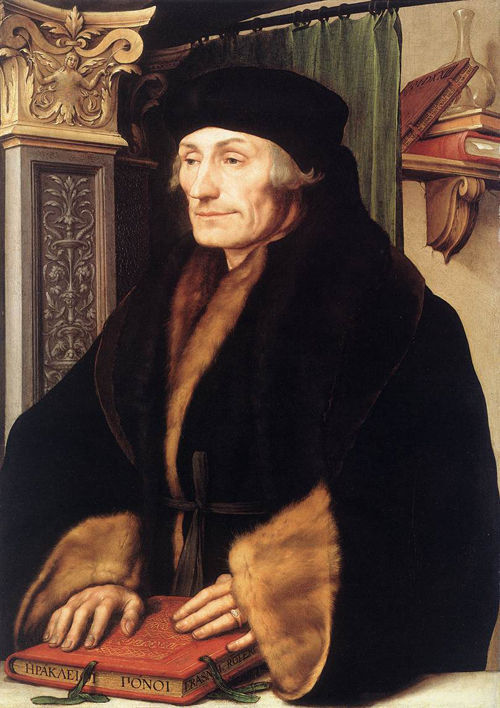
It’s interesting to consider King James Onlyists’ admiration for Desiderius Erasmus (1466-1536). Desiderius Erasmus was a priest, a humanist, and a bible scholar who translated directly from Greek manuscripts. His emphasis on certain Greek manuscripts and his de-emphasis of the Latin Vulgate was not typical in the period. His manuscript choices and his Greek editions of the NT were largely responsible for the Textus Receptus, the Greek text used to translate the King James Version. The following quote is typical of how King James Onlyists describe Erasmus. They essentially consider him to be a type of hero who saved the Bible during the dominant period of the ‘wicked’ Catholic Church.
Ken Matto, Why I am King James Only: “The person behind the beginning of the manuscript series leading up to the King James was Desiderius Erasmus who was a brilliant Greek scholar whom God used to begin the process of final purification of the manuscripts which would come to be known as the Textus Receptus in 1633, 22 years after the publication of the King James Bible. Erasmus was a critic of the Latin Vulgate of Jerome…”
They think that Erasmus was tremendous. In addition to the insuperable problems we’ve been covering, the problem for King James Onlyists is that throughout his life Erasmus claimed to be a Catholic and dedicated to the Church. He said Mass (though not frequently); he believed in the Eucharist, as well as some other Catholic teachings. (I don’t believe Erasmus was a true Catholic, but it’s a fact that he purported to be a Catholic throughout his life.)
King James Onlyists typically consider the Catholic Church to be a false anti-Christ sect, even the Whore of Babylon. According to them, the Catholic Church teaches paganism, heresy, and an idolatrous false gospel of the Devil. Does it make sense that God would ‘save the Bible’ through a ‘false anti-Christian sect’ of the Devil (the Whore of Babylon) and ‘an idolatrous pagan’ like Erasmus, who was a member of such a ‘sect’? Let’s read the KJV:
Luke 6:43-44- “For a good tree bringeth not forth corrupt fruit; neither doth a corrupt tree bring forth good fruit. For every tree is known by his own fruit. For of thorns men do not gather figs, nor of a bramble bush gather they grapes.”
Their own bible records that a corrupt tree does not bring forth good fruit. Obviously God would not save the Bible through a devilish false Church and a pagan or heretic who adhered to it. Their admiration for Erasmus, and the role they believe he played in saving the Bible, is inconsistent with their anti-Catholic rhetoric. Indeed, the fact that they must appeal to alleged ‘Catholics’ like Erasmus in documenting their Bible history reminds us again that the Catholic Church was the original and only Church of Christ, and that all Protestant denominations (including those of the King James Onlyists) are man-made sects.
ERASMUS’ CONDEMNATION OF PROTESTANTS
While KJV-Onlyists are generally effusive in their praise for Erasmus, Erasmus himself condemned those of their ilk. Here’s what he said about Protestants: the followers of Luther, ‘Evangelicals,’ etc.
Johan Huizinga, Erasmus and the Age of Reformation, pp. 176-177: “From the cause of the Reformation he [Erasmus] was now quite estranged. ‘Pseudevangelici’, he contumeliously calls the reformed. ‘I might have been a corypheus in Luther’s church,’ he writes in 1528, ‘but I preferred to incur the hatred of all Germany to being separate from the community of the Church.’… ‘Just look,’ he exclaims, ‘at the Evangelical people, have they become any better? Do they yield less to luxury, lust and greed? Show me a man whom that Gospel has changed from a toper to a temperate man, from a brute to a gentle creature, from a miser into a liberal person, from a shameless to a chaste being. I will show you many who have become even worse than they were.’ Now they have thrown the images out the churches and abolished mass (he is thinking of Basle especially): has anything better come instead? ‘I have never entered their churches, but I have seen them return from hearing the sermon, as if inspired by an evil spirit, the faces of all showing a curious wrath and ferocity, and there was no one except one old man who saluted me properly, when I passed in the company of some distinguished persons.’”
Concerning the Protestants, who reject Mass, the Church, holy images, etc., Erasmus says they are separated from the Church. He calls them pseudo-evangelicals. He says that it’s as if they were “inspired by an evil spirit.” It of course makes no sense for King James Onlyists to hold that such an individual, who condemned their sects as devilish and adhered to what they themselves consider a devilish sect, was God’s chosen vessel to protect and transmit His sacred word.
THE KING JAMES VERSION’S ERROR IN REVELATION 16:5
Protestant James White, who adheres to sola scriptura but opposes King James Onlyism, pointed out that in Revelation 16:5, the King James Bible has a reading that was completely novel in Christian Tradition. It was based on no Greek manuscript support whatsoever. This is extremely significant because, as we saw earlier, King James Onlyists hold that the 1611 KJV is ‘perfect.’ If even one error is documented in the ‘Authorized Version,’ the ‘King James Only’ sect crumbles.
Dr. Samuel Gipp, The Answer Book – A Helpbook for Christians [concerning the King James], Q. #58, p. 154: “QUESTION: How many mistakes are there in the King James Bible? ANSWER: None. EXPLANATION: None.”
Notice that he also says: “EXPLANATION: None.” Since his adherence to King James Onlyism is not rooted in Christ’s teaching or logical consistency, but rather in blind faith and subservience to the false gods he has chosen for himself (namely: King James I, his bible and its translators), he feels no need to even offer an explanation for why the KJV is without error.
Revelation 16:5
| The ‘Authorized Version’-The 1611 King James Bible | The New American Standard Bible (and other translations) |
| “And I heard the angel of the waters say, Thou art righteous, O Lord, which art, and wast, and shalt be, because thou hast judged thus.” | “And I heard the angel of the waters saying, Righteous art You, who are and who were, O Holy One, because You judged these things:” |
“Every Greek text – not just Alexandrian texts, but all Greek texts, Majority Text, the Byzantine Text, every manuscript, the entire manuscript tradition – reads ‘O Holy One’ [in Rev. 16:5]… So why does the KJV read ‘and shalt be’? Because John Calvin’s successor at Geneva, Theodore Beza, conjectured that the original read differently… But he had no manuscript evidence in support of his conjecture. For the KJV Only advocate, there is simply no way out of this problem… So how does the AV defender respond to the documentation that the King James Version contains a reading out of the mind of Theodore Beza, one unknown to the ancient church, unknown to all Christians until the end of the sixteenth century? John did not write ‘and shalt be.’ He wrote ‘O Holy One.’ This is the united testimony of all relevant historical information. To deny this is to engage in the most egregious form of irrational thought. It is not faith to deny reality, it is deception.” (James White, The King James Only Controversy, pp. 239-241.)
White points out that Erasmus (one of the compilers of the Greek text that became the Textus Receptus), Stephanus (another compiler of the Textus Receptus), English versions before the King James, and everything else had “O Holy One.” The Vulgate also has “O Holy One” in Rev. 16:5. It was Theodore Beza who, in considering the Greek, decided to come up with his own reading for that verse; and his novel reading found its way into the KJV.
Hence, in the case of Rev. 16:5, which has no Greek manuscript support whatsoever (and which is contradicted by the Latin Vulgate), KJV-Onlyists are putting blind faith in the reading that Theodore Beza decided to come up with. In the face of the facts, KJV-Onlyists hold that not even one error could possibly be found in the KJV.
KJV-Onlyism is simply a ‘faith of man,’ an anti-Christian cult that places unfailing confidence in an Anglican king, his translators, and their bible version – none of which were promised a special protection from Jesus Christ.
A FALSE CHRIST AND A SECOND PENTECOST
Here are a few quotes from King James Onlyists in which they express their worship of this bible version, the men who put it together, and the King who commissioned it.
Dr. Samuel Gipp, The Answer Book – A Helpbook for Christians [concerning the King James], Q. #56, p. 148: “QUESTION: What should I do where my Bible and my Greek Lexicon contradict? ANSWER: Throw out the Lexicon… It must be remembered that God never claimed that He would provide us with a perfect lexicon or an inerrant Greek grammar. He said that He would provide us with a perfect Bible.”
Where exactly did God say that the King James Version, commissioned under an English sovereign more than a millennium after Christ, would be perfect? Nowhere, of course. To place blind faith in someone or something which Christ has not given any indication He will protect is to put that person or thing on a level with God – period. It is to worship that entity as another Christ: as something or someone constituting divine revelation on its OWN AUTHORITY or on the authority arbitrarily accorded to it by men. That’s exactly what we see in King James Onlyism: the elevation of the King James Bible and those involved with it to divine status. It is THEIR FALSE CHRIST.
In fact, all men who found their own ‘Churches’ are false Christs. All of the founders of Protestant sects were and are false Christs; for they have arrogated to themselves authority which only Christ had: only Jesus Christ can establish the Christian Church and reveal its teachings. While it’s true that all Protestants are following what has been established by a false Christ, this truth is exemplified in a special way in certain Protestant sects or movements, such as King James Onlyism.
With no basis in Christ’s teaching for their conclusion, KJV Onlyists illogically presume that the King James is God’s ‘perfect’ version. Without question this is to initiate a second false Pentecost, to pretend that the Church was established anew during the reign of King James I, with the Holy Spirit giving a special new commission to King James I. Undoubtedly it’s a new and false Church of man, based on their false Christ: King James I of England and the Bible translation He commissioned – just as Joseph Smith is a false Christ to Mormons, having founded a new Church and revealed new doctrines not contained in the teaching of Christ.
Here are a few more quotes illustrating the KJV Onlyists’ false-Christ/new-Pentecost mentality.
Dr. Samuel Gipp, The Answer Book – A Helpbook for Christians [concerning the King James], Q. #10, p. 45: “QUESTION: What does this statement mean? ‘The King James Bible was good enough for the Apostle Paul, so it’s good enough for me.’ ANSWER: This statement was usually made in a sarcastic manner in order to embarrass Bible believers in their belief. The FACT is, the King James Bible WAS good enough for Paul.”
After explaining that this statement has been made sarcastically, Gipp repeats it seriously. He acts as if the King James Version of the Bible was eternal, floating around during the apostolic period, serving as St. Paul’s faithful companion, existing before it was even translated in 1611. The argument is similar to how someone might say that Jesus Christ (the Son of God) was present at Old Testament events prior to His incarnation. The King James Bible is their false Christ.
Dr. Samuel Gipp, The Answer Book – A Helpbook for Christians [concerning the King James], Q. #17, p. 65: “QUESTION: If King James didn’t authorize the Bible for use in churches, who was it translated for? ANSWER: The common man… It has been said, ‘Put a beggar on horseback and he’ll ride off at a gallop.’ This best describes a common man’s reaction to being given a perfect bible.”
Dr. Samuel Gipp, The Answer Book – A Helpbook for Christians [concerning the King James], Q. #12, p. 59, ON CRITICS OF THE KJV: “ANSWER: … Then, after the student has been accepted [to Bible college]… then and only then, do they begin ever so subtly to destroy their faith in the perfect Bible and show that the ‘good old King James’ is full of errors. But they know, and God knows that they were too scared not to bend their knees to ‘the God of the land’ and His book, the King James Bible.”
CONCLUSION
The facts that we’ve considered prove without any doubt that ‘King James Onlyism’ is false. It is the disastrous and bad fruit of a heretical religious system (Protestantism) and the false doctrine of sola scriptura.
Yet, what about their primary argument: if the KJV isn’t God’s perfectly preserved Bible, then where is God’s perfectly preserved Bible?
REFUTING THE PRIMARY ARGUMENT AND CONCERN OF KJV-ONLYISTS – THEY MISIDENTIFY THE MEANING OF GOD’S “WORD” IN PSALM 12 AND MATTHEW 24
As stated above, the primary argument made by KJV-Onlyists is one of necessity. People on both sides of this issue generally agree that the original writings of the Bible were inspired and infallible. But we no longer have the original writings. We have copies which were made by hand before printing technology existed. In the process of hand-copying the texts, some mistakes were made.
The NT manuscripts that we have supply abundant evidence for what Scripture contained in the vast majority of verses. The NT manuscript evidence we have also far exceeds the manuscript evidence we have for other celebrated and unquestioned works of antiquity. However, the manuscripts of the NT which we have are not perfect. They contain what are called ‘textual variants.’ A ‘variant’ could be a small mistake, a difference in spelling, a repeated phrase, an omission, an addition, a slightly different reading, etc.
TODAY WE HAVE APPROXIMATELY 5000 NEW TESTAMENT MANUSCRIPTS – MOST ARE FRAGMENTARY AND NONE OF THEM AGREE IN EVERY DETAIL
As Protestant biblical scholar D.A. Carson explained:
“What we possess is something over 2,100 lectionary manuscripts, more than 2,700 minuscules, just over 260 uncials, and about 80 papyri. To keep things in perspective, however, it is important to remember that the vast majority of these 5,000 or so manuscripts are fragmentary, preserving a few verses or a few books. Only about 50 of these 5,000 contain the entire New Testament, and only one of these 50 is an uncial (viz., codex Sinaiticus). Most of the manuscripts, however, do contain the four Gospels.” (D.A. Carson, The King James Version Debate - A Plea for Realism, p. 18.)
He also explains that no two manuscripts agree in every detail.
“By contrast, the New Testament, as I have said, is preserved in five thousand Greek manuscripts and eight thousand manuscripts of versions. Yet despite this abundant supply of manuscript evidence, this providential wealth of material sufficient to embarrass the most industrious textual critic, it is a stark fact that no two manuscripts agree in every detail.” (D.A. Carson, The King James Version Debate - A Plea for Realism, pp. 18-19.)
Now it’s crucial to realize that working from the assumption of sola scriptura (i.e. the position that a book is the ONLY infallible rule of faith and practice for a Christian), King James Onlyism is launched in direct reaction to the aforementioned fact about the imperfection of extant biblical manuscripts. It is a frustrated and emotional response to the realization that since we no longer have the original writings, the copies of Scripture that we have are not ‘perfect’ in every way that the original writings were. Thus, while KJV-Onlyism (in light of the facts we’ve been covering) is clearly untenable, false and ridiculous, it also points us to a larger issue: namely, the error of sola scriptura.
The KJV-Onlyists reason that since the Bible is the ONLY infallible rule of faith (sola scriptura), and God promised to preserve His word forever (Psalm 12:6-7; Mt. 24:35), there must be a perfect and infallible bible version somewhere for people to use. KJV-Onlyists are quick to mention that Psalm 12 and Matthew 24 tell us that God will preserve His word forever.
Psalm 12:6-7- “The words of the LORD are pure words: as silver tried in a furnace of earth, purified seven times. Thou shalt keep them, O LORD, thou shalt preserve them from this generation for ever.” (KJV)
Matthew 24:35- “Heaven and earth shall pass away, but my words shall not pass away.” (KJV)
They quote these passages all the time. For example, they argue thus:
Dr. Samuel Gipp, The Answer Book – A Helpbook for Christians [concerning the KJ Bible], Q. #61, p. 158: “QUESTION: What if there really ARE mistakes in the King James Bible? ANSWER: Then it’s up to you to find the Book that God was talking about in Psalm 12:6,7 and Jesus was talking about in Matthew 24:35.”
James L. Melton, How I Know the King James Bible is the Word of God: “Psalm 12:6-7 says, 'The words of the LORD are pure words: as silver tried in a furnace of earth, purified seven times. Thou shalt keep them, O LORD, thou shalt preserve them from this generation forever.'… These words state very clearly that God's preserved word MUST be available to us today, because God PROMISED to preserve it for us. There MUST be an infallible Book somewhere… If His words didn't pass away, then where are they? I want to read them. There has to be a perfect volume somewhere. I know the King James Bible is the word of God because God promised to preserve His words.”
It’s crucial to understand that the KJV-Only position is inextricably connected with the doctrine of sola scriptura. Since, they argue, the Bible is all we’ve got, God must have perfectly protected one of these Bible versions AND IT’S THE KJV! If not, FIND THE BOOK!
The error in their argument, however, is contained in the premise: they wrongly assume that the “words of the Lord” and “God’s words” (mentioned in Psalm 12 and Mt. 24) are limited to a book; but God’s promise in Psalm 12 and Matthew 24 does not mention a “book.” It mentions God’s “words.”
THE BIBLE TEACHES THAT THE SPOKEN WORD IS “THE WORD OF GOD,” IN ADDITION TO THE WRITTEN WORD
A common misconception among Protestants is that the “word of God” refers exclusively to the Bible. The truth is that the Bible itself teaches that the spoken word is “the word of God,” in addition to the written word. The Bible repeatedly calls the oral (spoken) tradition “the word of God.” (Jesus Christ Himself is also called the “Word of God” in John 1 and Hebrews 11:3.)
1 Thessalonians 2:13- “For this cause also thank we God without ceasing, because, when ye received the word of God which ye heard of us, ye received it not as the word of men, but as it is in truth, the word of God, which effectually worketh also in you that believe.”
As we see, St. Paul is referring to the oral (spoken) tradition as the word of God. By describing the oral tradition as “the word of God,” the Bible is indicating that the apostolic oral tradition is infallible, and that it represents, along with Scripture, one of the sources of Jesus Christ’s revelation which must be accepted.
MORE VERSES ON THE NECESSITY OF ACCEPTING CHRISTIAN “TRADITION” AND HOW “THE WORD OF GOD” IS ALSO CONTAINED IN THE ORAL OR SPOKEN WORD
In 2 Thess. 2:15, the Bible clearly teaches that one must accept both Scripture and Tradition; it even says that the Bible itself is a Tradition.
2 Thessalonians 2:15- “Therefore, brethren, stand fast, and hold the traditions which ye have been taught, whether by word, or our epistle.”
2 Thessalonians 3:6- “Now we command you, brethren, in the name of our Lord Jesus Christ, that ye withdraw yourselves from every brother that walketh disorderly, and not after the tradition which he received of us.”
The following verses also prove that the spoken word was the “word of God” which must be preserved and handed down, and it was preserved and handed down for all generations in the teaching of the Church Christ established.
1 Corinthians 11:34- “… And the rest will I set in order when I come.”
2 John 1:12- “Having many things to write unto you, I would not write with paper and ink: but I trust to come unto you, and speak face to face, that our joy may be full.”
2 Timothy 2:1-2- “Thou therefore, my son, be strong in the grace that is in Christ Jesus. And the things that thou hast heard of me among many witnesses, the same commit thou to faithful men, who shall be able to teach others also.”
Therefore, even though we no longer have the original New Testament writings (‘THE AUTOGRAPHS’), but only manuscript copies which are not perfect in every detail as the originals were, God’s words are still preserved, just as He promised in Psalm 12 and Mt. 24, in the apostolic Tradition, the teaching of His Church, and what we do know about the written word from the copies that have been passed down to us.
With this realization, the entire argument of King James Onlyists is crushed. There need not be any modern book that is a perfect translation or representation of the original writings because God never promised that He would preserve His words in every generation in a book. He promised to preserve His “words,” and He does so in the teaching of His one Church, the pillar and foundation of the truth (1 Tim. 3:15), and in what we do know about the original writings.
MORE QUOTES ON HOW THE SPOKEN WORD IS “THE WORD OF GOD”
Colossians 1:5-6- “For the hope which is laid up for you in heaven, whereof ye heard before in the word of the truth of the gospel. Which is come unto you, as it is in all the world; and bringeth forth fruit, as it doth also in you, since the day ye heard of it, and knew the grace of God in truth.”
The spoken word is described as “the word of truth” and the Gospel. The reference to the “word” having come into the whole world confirms that this passage is referring to the spoken word and not the Bible; for this could not have been said of the Bible at the time.
John 17:20- “Neither pray I for these alone, but for them also which shall believe on me through their word.”
Jesus prays for those who will believe through the “word” of His apostles. But only a few of His Apostles wrote words in the Bible. Most of them did not. “Their word,” through which people will believe, must therefore be their preaching and the communication of oral tradition, not their writing.
Luke 8:11-13- “Now the parable is this: The seed is the word of God. Those by the way side are they that hear; then cometh the devil, and taketh away the word out of their hearts, lest they should believe and be saved. They on the rock are they, which, when they hear, receive the word with joy; and these have no root, which for a while believe, and in time of temptation fall away.”
This clearly describes the spoken word as “the word of God.”
Luke 4:44-5:1- “And he [Jesus] preached in the synagogues of Galilee. And it came to pass, that, as the people pressed upon him to hear the word of God, he stood by the lake of Gennesaret.”
Luke 3:2- “Annas and Caiaphas being the high priests, the word of God came unto John the son of Zacharias in the wilderness.”
This refers to a revelation given to St. John the Baptist.
Acts 4:31- “And when they had prayed, the place was shaken where they were assembled together; and they were all filled with the Holy Ghost, and they spoke the word of God with boldness.”
PROTESTANTS WHO REJECT KING JAMES ONLYISM ARE UNABLE TO COMPLETELY REFUTE KING JAMES ONLYISTS BECAUSE THEY ACCEPT SOLA SCRIPTURA
As mentioned above, there are many Protestants who adhere to sola scriptura but reject King James Onlyism. They can of course point to problems with King James Onlyism. Yet, they remain unable to respond to the main argument King James Onlyists bring forward. The KJV-Onlyists will say that if Scripture is the only infallible rule, “Then it’s up to you to find the Book that God was talking about in Psalm 12:6,7 and Jesus was talking about in Matthew 24:35.”
The Protestant non-KJV-Onlyists are unable to refute this objection, for they hold to the unbiblical and unhistorical heresy of sola scriptura. They have no response to KJV-Onlyists on this point because they fail to recognize, as stated above, that the “words of God” are preserved in Tradition and the Church’s teaching, in addition to Scripture. Only true Christians, that is, Catholics, can fully respond to and refute King James Onlyism.
KING JAMES ONLYISM IS A HERETICAL, ANTI-CHRISTIAN MOVEMENT WHICH EXPOSES THE PROTESTANT HERESY OF SOLA SCRIPTURA
A careful and honest consideration of these facts not only demonstrates that King James Onlyism is false, but that sola scriptura – and therefore Protestantism itself, which is inextricably bound to sola scriptura – is implausible, unreasonable, and false. God did not, and never would have, intended that the ONLY infallible source of revelation and rule of faith and practice would be a book or a collection of books.